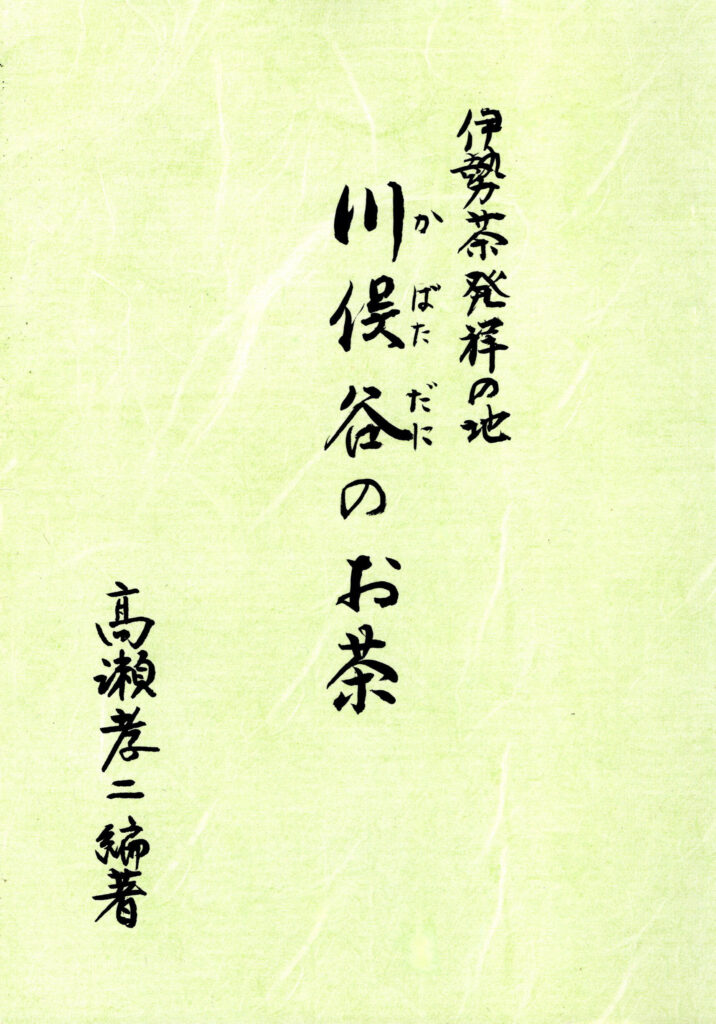
Tea of Kawamatadani, the birthplace of Ise tea
The full text of “Tea of Kawamatadani, the Birthplace of Ise Tea” by Takase Koji—Japanese Tea Instructor Leader and great-uncle of the owner, Takase Haruka—is now available as a PDF.
Set in Kawamatadani, the birthplace of Ise tea, the book traces the passion and history of pioneers who offered tea to the shogunate and led Meiji-era exports to the US. The author, a Japanese Tea Instructor Leader, draws on his expertise to cover everything from the lost hand-rolling technique to postwar revival. A concise history of a thousand years of fine Ise tea, from a tea professional’s perspective.
[About the author] Takase Koji: Based in Matsusaka (former Mie Prefecture official). Retired as Senior Researcher and Director of the Tea Research Center, Mie Agricultural Technology Center. Later served as Managing Director of the Mie Prefecture Tea Council. Certified Japanese Tea Instructor Leader; dedicated lecturer for the Japanese Tea Adviser training course. Received the Order of the Sacred Treasure, Gold and Silver Rays (Reiwa 6). Author of “History of Tea in Mie Prefecture,” among others.
What is Ise Tea
Ise tea is the name given to tea produced in Mie Prefecture. Its history is long: by the Edo period it was already grown as a specialty of Ise (today’s Mie). The whole of Mie is now a production area, and the region’s climate and soil give the tea its deep flavour.
Japan’s third-largest tea-growing region
Mie Prefecture is one of Japan’s leading tea-producing areas, ranking third in production after Shizuoka and Kagoshima. A little-known fact: much of Japan’s tea is grown here in Mie.
The character of Ise tea: fukamushi sencha
Fukamushi (deep-steamed) sencha, representative of Ise tea, is made by steaming the leaves longer so that theanine and other umami components in the stems are extracted more easily. Rich and smooth, it consistently ranks at the top in national tea competitions.
- Taste: a firm astringency and memorable depth
- Colour: a deep, cloudy green from the fine leaf particles
- Aroma: a rich, grassy fragrance
- Brewing: lower temperature (around 70°C) brings out more sweetness
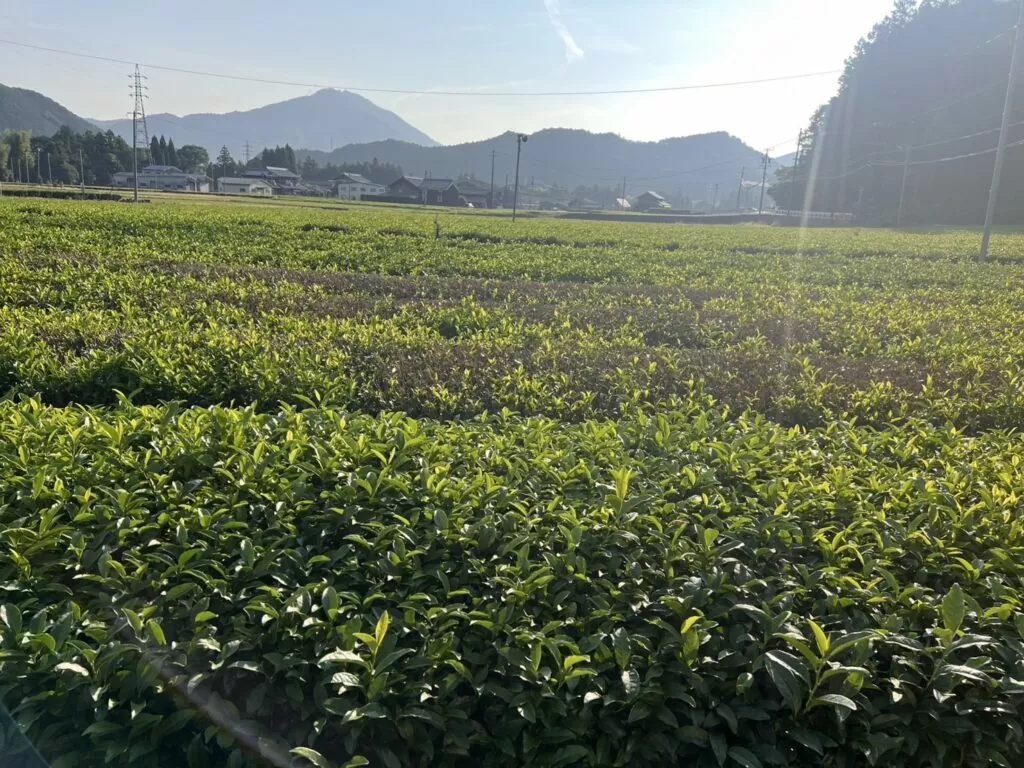
Fukamushi sencha
Whereas standard sencha is steamed for about 30–40 seconds, fukamushi is steamed for two to four times longer (about 60–180 seconds). This longer steaming breaks down the leaf cells more, reduces astringency, and produces a smooth, full-bodied taste. The liquor tends to be a deep, cloudy green because of the fine particles. Brewing at a slightly lower temperature (around 70°C) than usual brings out more sweetness.
Why Ise tea tastes so good: climate and robust leaves
Mie, especially the “Nansei” area, has long had conditions that are remarkably well suited to tea. The region enjoys a mild climate and very long hours of sunshine. Rivers such as the Miyagawa provide ample rain and humidity, which keep the tea plants healthy. The leaves that grow in this demanding but fertile environment store plenty of nutrients and develop a thickness and strength rarely found elsewhere.
The thickness of the leaves goes hand in hand with depth of flavour. Ise tea leaves, with their substantial body, release a firm astringency and rich body the moment hot water is poured. Ise tea’s appeal lies in the “true umami of tea” you can taste—not just bitterness, but a clear, core flavour.
Sunlight and the region’s climate encourage the leaves to produce catechins and amino acids (theanine). The result is a liquor of strikingly vivid green and a rich, grassy aroma that lingers. That aroma and long-lasting finish can turn an ordinary moment into a special, relaxing one.
Hojicha
Hojicha (roasted tea) is made by roasting green teas such as sencha, bancha, or kukicha over high heat. Pyrazines produced by roasting give it its characteristic nutty aroma. It is mild and suits mealtimes, and roasting reduces caffeine, so it is often enjoyed in the evening. In English it is called roasted green tea.
History of Ise tea
The history of Ise tea is very long, going back to the Engi era (901–922) of the Heian period. At first, tea was treasured as a “medicine” and cultivated with care at temples.
In the Edo period, Ise tea spread across Japan thanks to the work of oshi (pilgrim guides) and Ise merchants. Land surveys from 1594 record tea paid as tribute, showing that tea was already being grown here by then.
In the Meiji period, Ise tea played a central role in Japan’s tea exports. In the early Meiji years, Mie had the highest tea production in the country and led exports to the United States. In 1884, Komada Sakugoro and others in Mukamoto formed the Mie Prefecture Tea Company and exported Ise tea directly to American trading houses, achieving the top results in Japan.
Ise tea’s forgotten golden age of export
Ise tea once had a “golden age” when it was a major export and part of daily life in America. After Japan–US relations deteriorated in the Showa period, that export route was cut off. It is said that without that upheaval, Japanese sencha might have taken root in America alongside coffee and black tea. Ise tea had captured people’s hearts and was on the verge of becoming a lasting part of the culture.
With the opening of Japan in the late Edo period, the country’s agricultural products reached the world. From the end of the shogunate through early Meiji, tea was one of Japan’s two main exports (with raw silk) and a pillar of foreign exchange. Most of that tea went to America—over 80% of Japan’s tea exports—and Ise tea was at the centre of that demand.
At the peak of the trade, New York alone had over 2,500 tea gardens where Ise tea was served. For Americans, its refreshing aroma and deep flavour became part of their daily lives.
Japanese black tea
Wakocha is black tea produced in Japan from Japanese-grown leaves. Unlike stronger Assam-style teas, it often uses Chinese cultivars and tends to be sweeter and more umami. Compared with bold, fragrant overseas black teas, wakocha offers a subtle, delicate aroma. In English it is called Japanese black tea.
Products
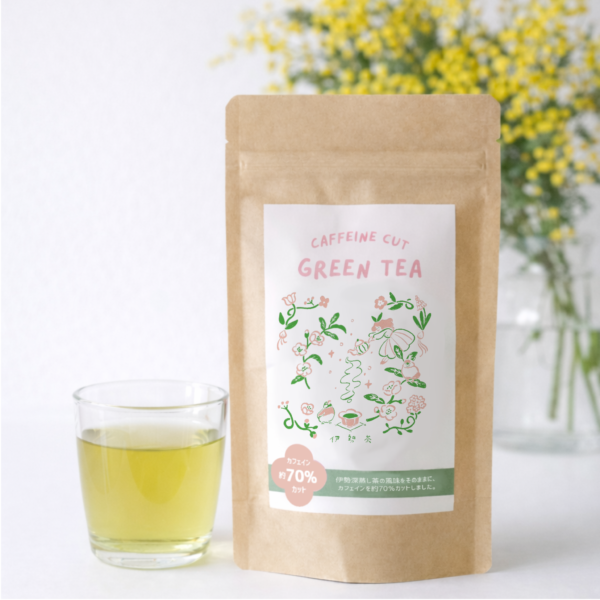 Decaffeinated (decaf) green tea 8 teabags¥1,296 (tax incl.)
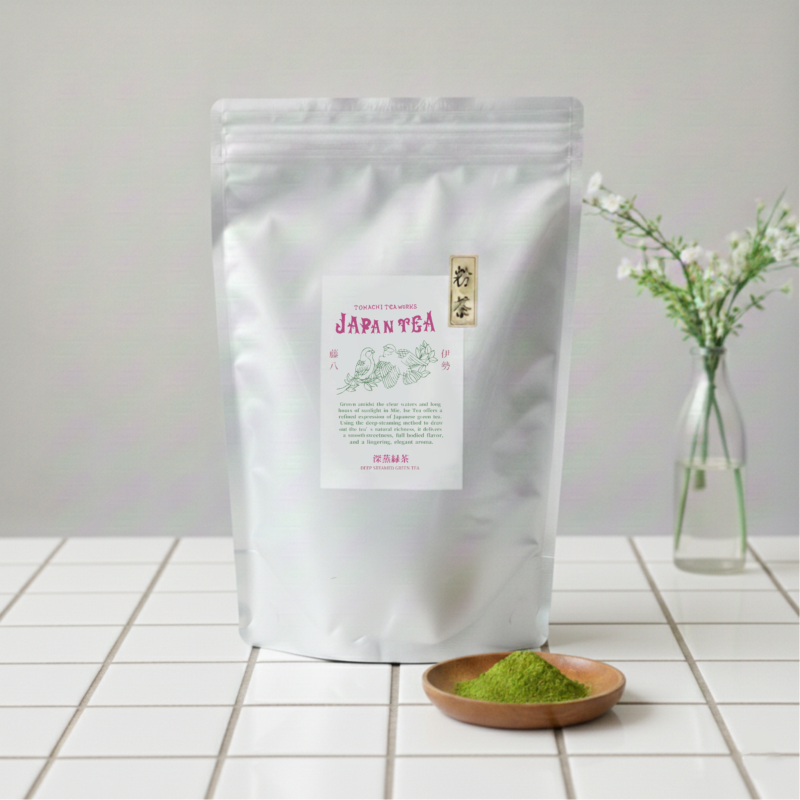 Ise-cha powder 500g (unsweetened)¥6,450 (tax incl.)
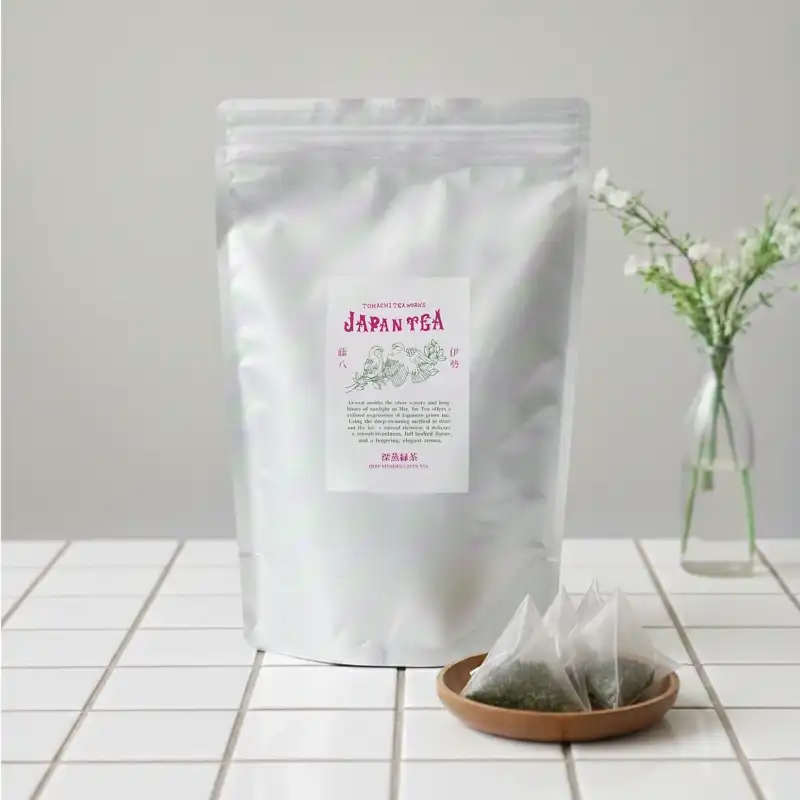 Ise deep steamed tea 50 teabags¥5,940 (tax incl.)
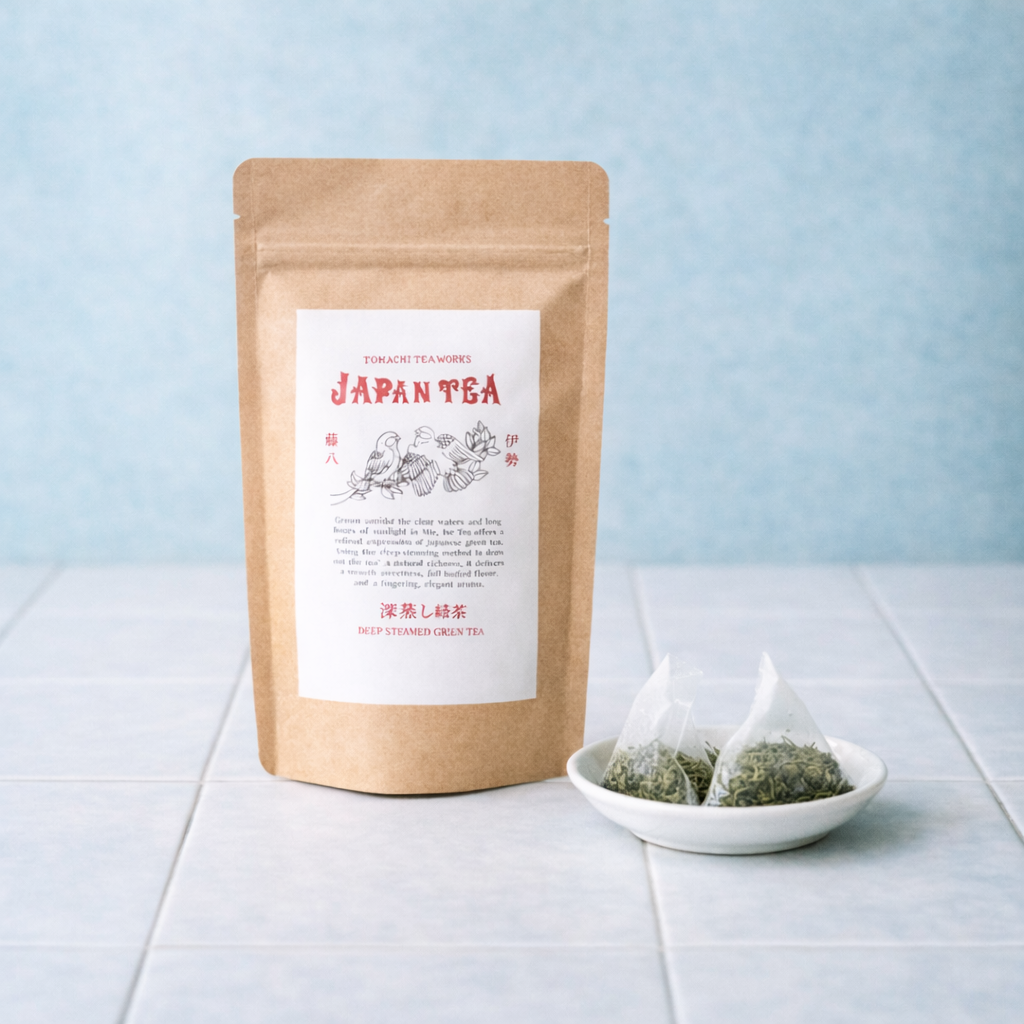 Ise deep steamed tea 10 Teabags¥1,188 (tax incl.)
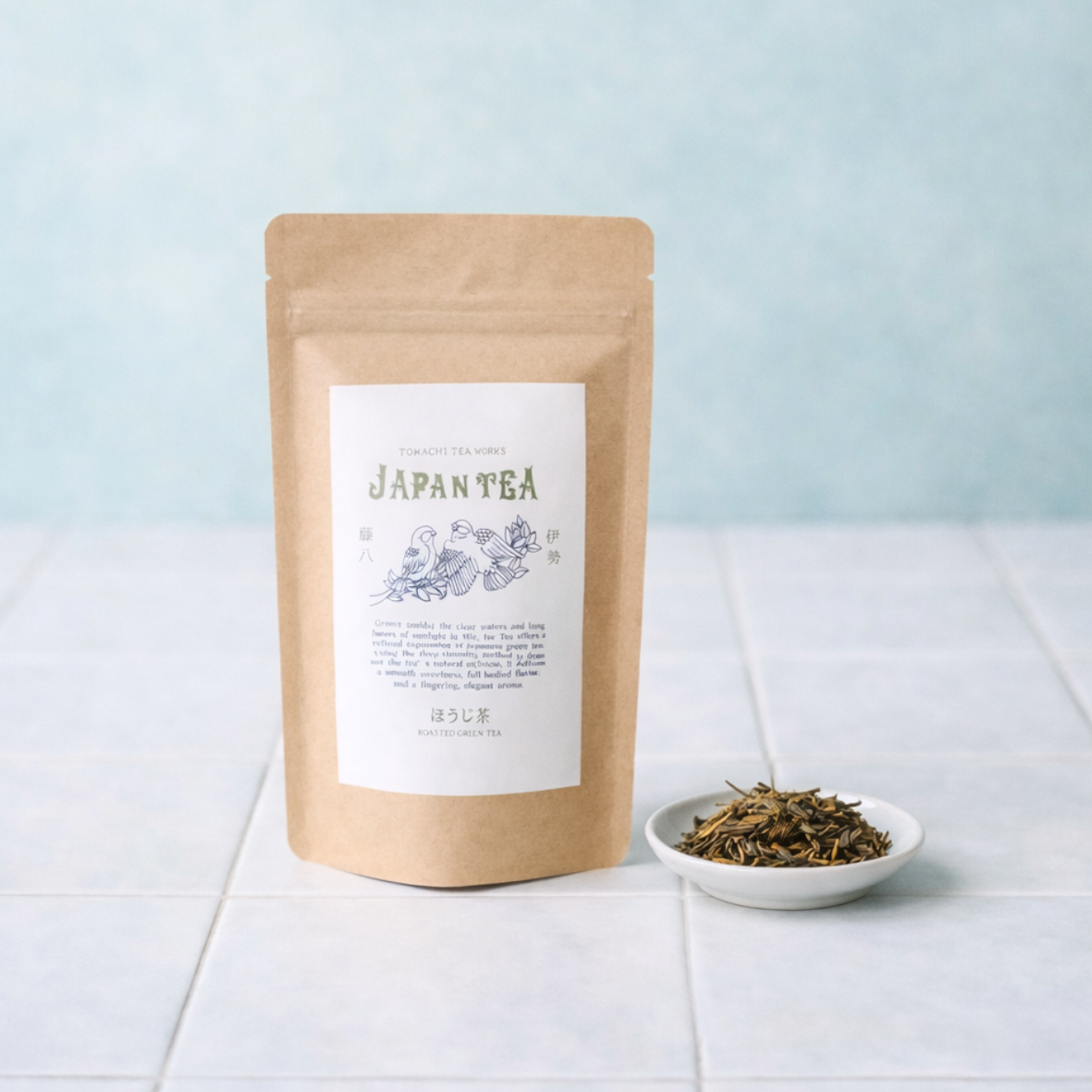 Ise hojicha leaf (tea leaves) 30g¥972 (tax incl.)
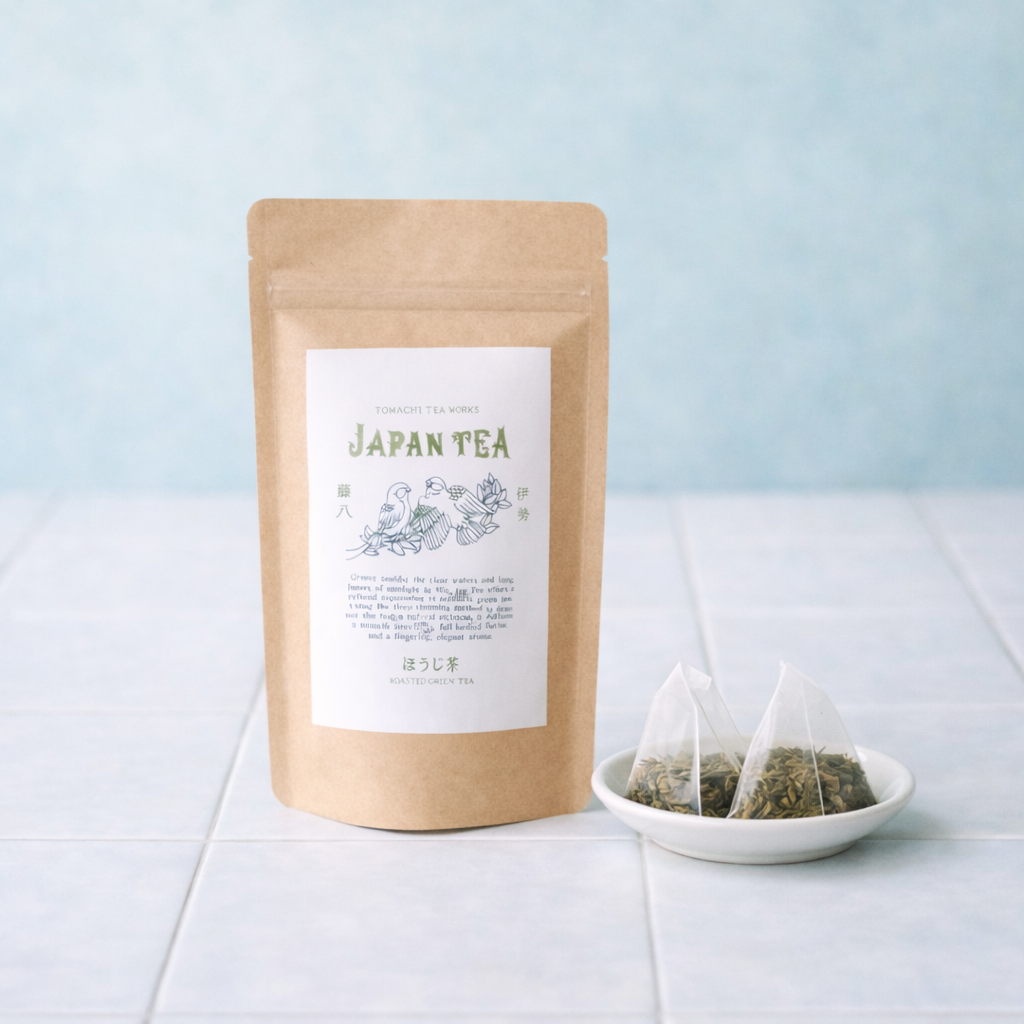 Ise hojicha 8 teabags¥972 (tax incl.)
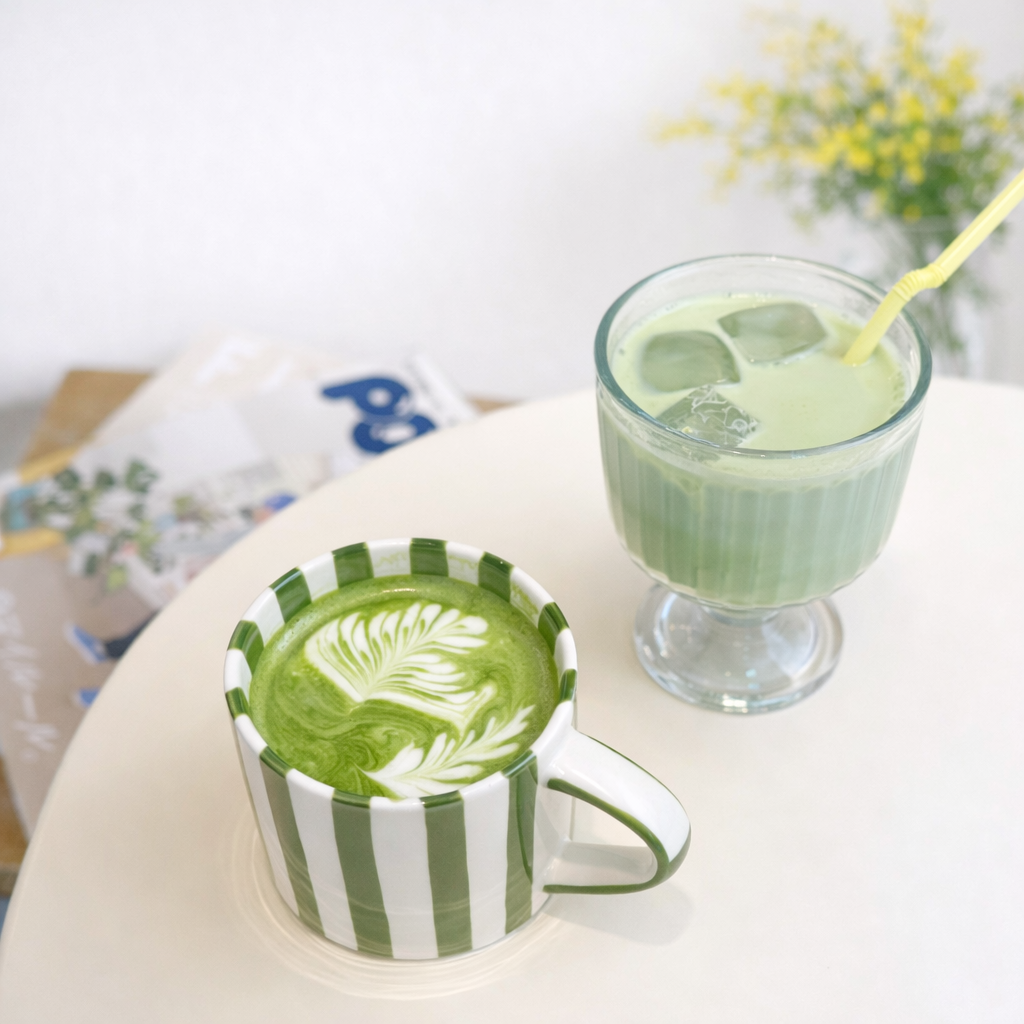 Ise deep steamed tea powder 100g (unsweetened)¥1,380 (tax incl.)
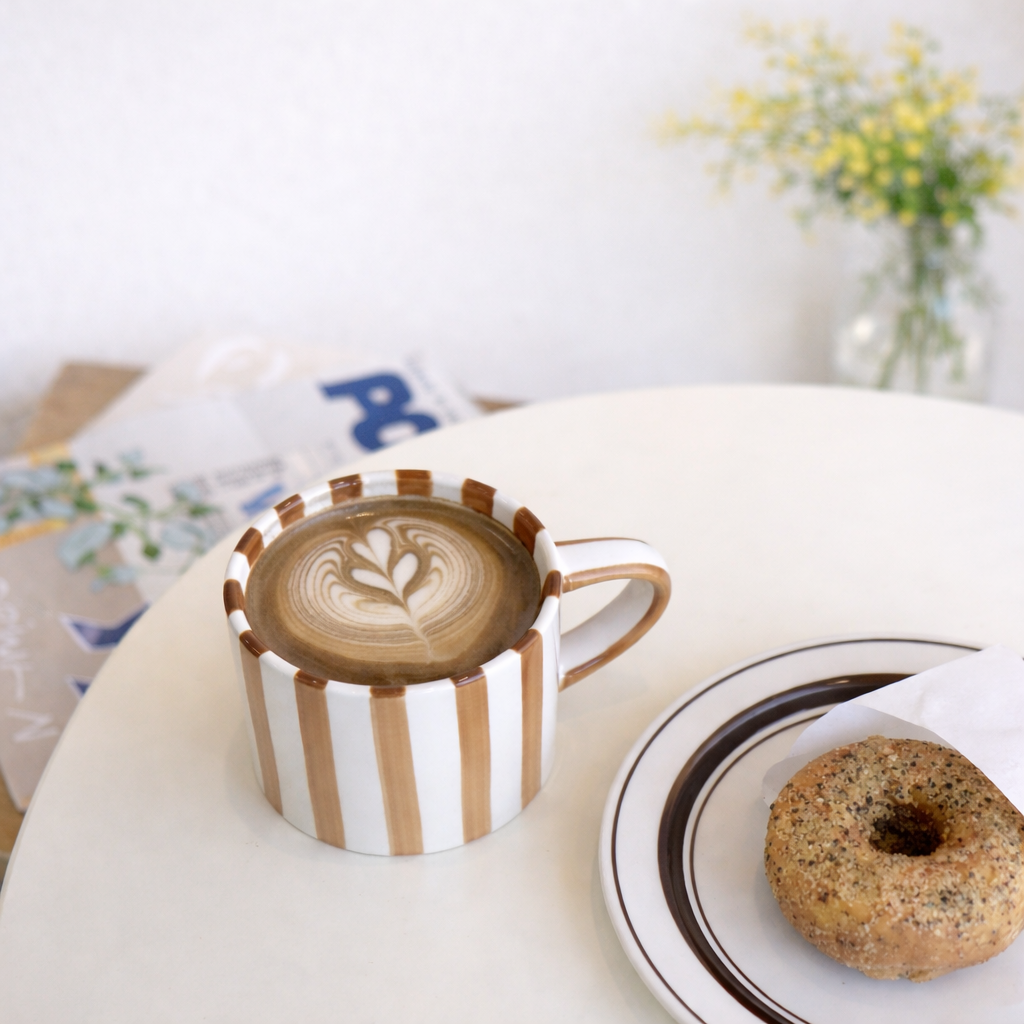 Ise hojicha powder 80g (unsweetened)¥1,380 (tax incl.)
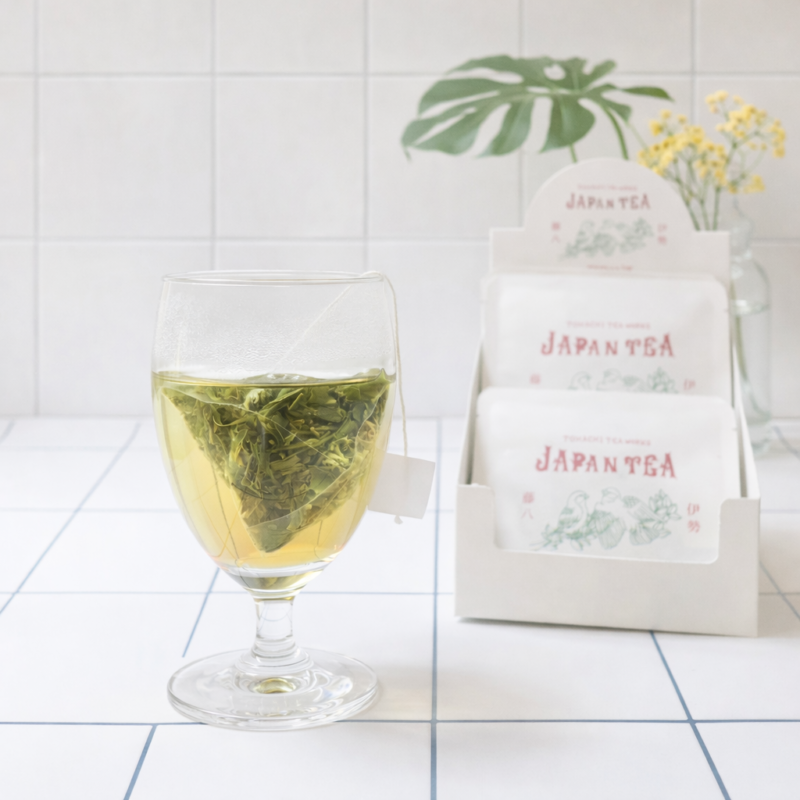 Ise deep steamed tea 3 Teabags¥648 (tax incl.)
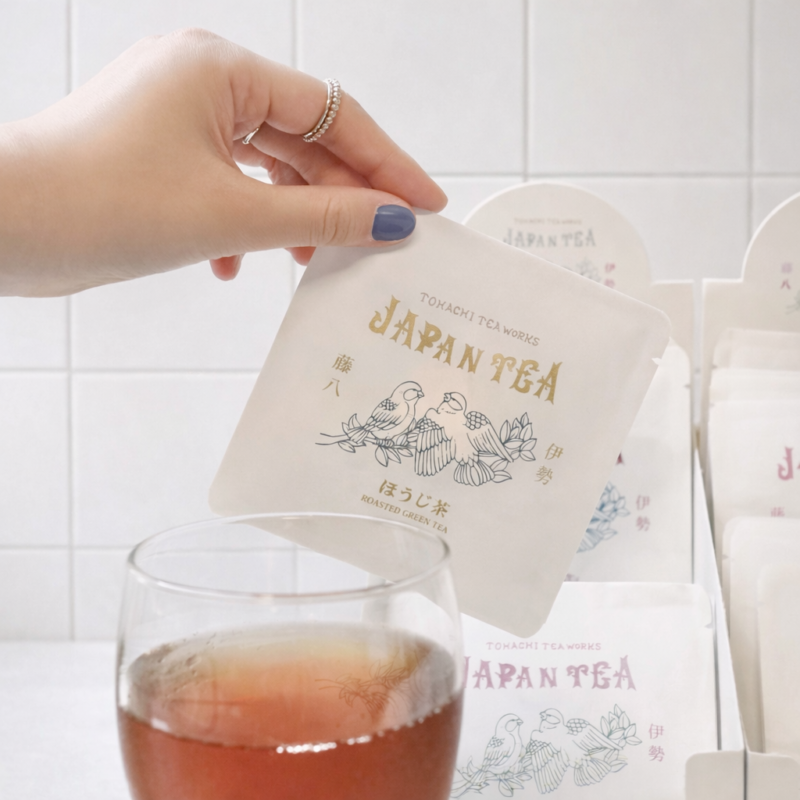 Ise hojicha 3 tea bags¥648 (tax incl.)
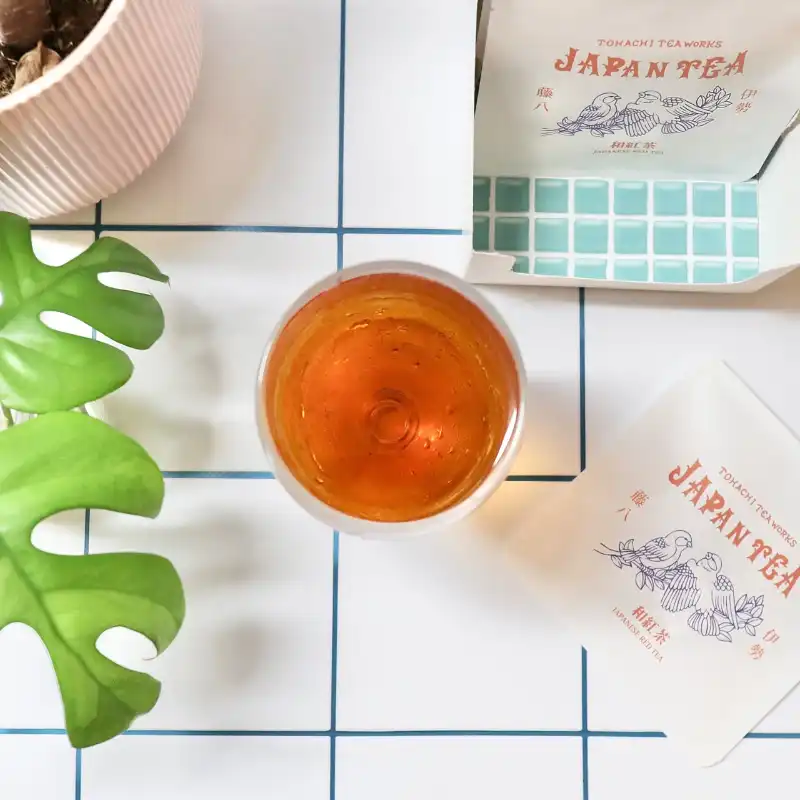 Ise Japanese Black Tea 3 Teabags¥648 (tax incl.)
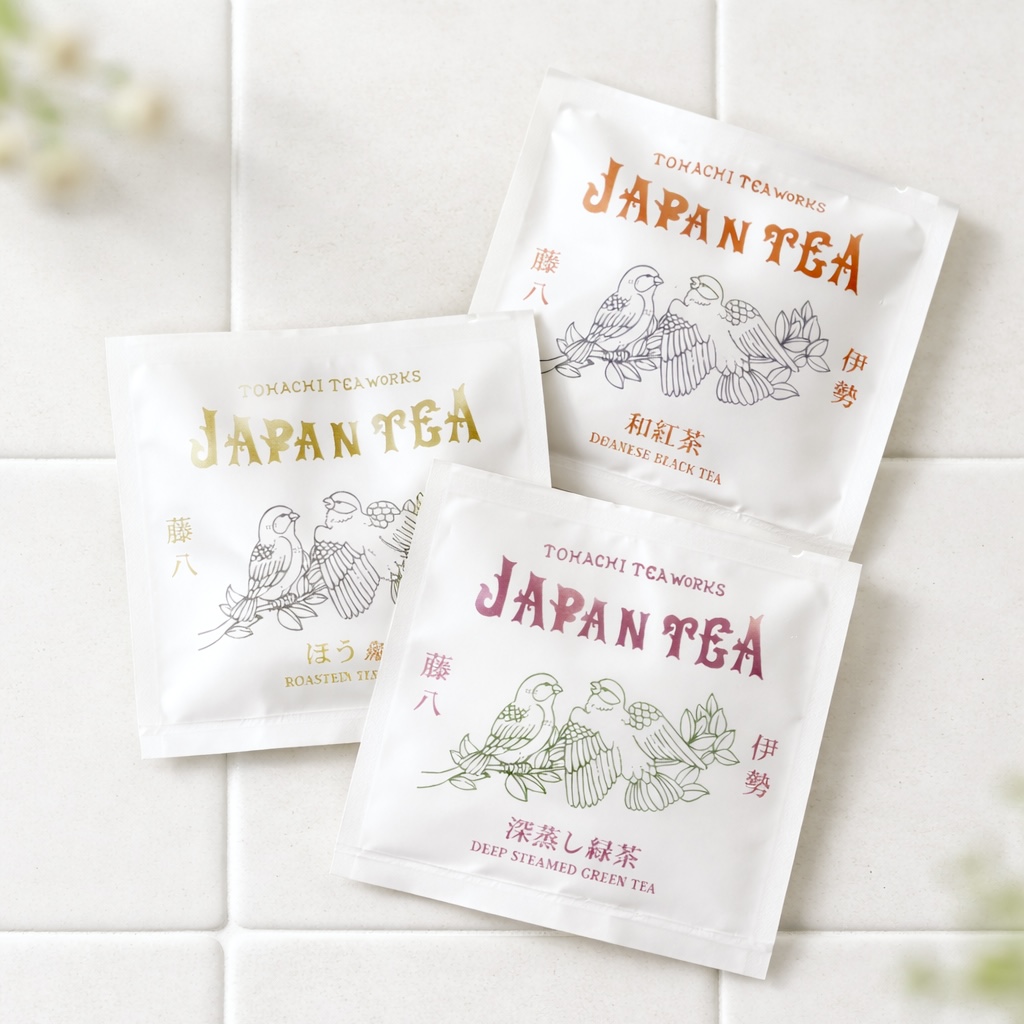 Comparison set of 3 teabags¥648 (tax incl.)