Deep-Steamed Sencha Online|Single-Origin Ise Tea from Kawamatatani
Fukamushi sencha is steamed 2–4 times longer than standard sencha, reducing bitterness and drawing out a smooth, rich umami. At Fujihachi Saryo, our deep-steamed tea is single-origin — grown in our own tea fields in Kawamatatani, Matsusaka, Mie Prefecture — delivering a flavour found nowhere else.
Ise Tea Deep-Steamed TeabagsWhat is fukamushi sencha? — the mellow richness born from the process
"Fukamushi" means deep steaming. Whereas standard sencha is steamed for 30–40 seconds, fukamushi sencha is steamed slowly for 60–180 seconds — 2 to 4 times as long.
This extended steaming breaks down the cell walls of the tea leaves, finely dispersing the compounds responsible for bitterness. The result is a tea with less astringency and a smooth, rich, full-bodied flavour. The liquor takes on a deep, cloudy green — a hallmark of fukamushi created as fine leaf particles dissolve. That cloudiness is a sign of the tea's rich flavour and nutrition.
The optimal brewing temperature is around 70°C. Brewing at lower temperatures brings out more sweetness and umami.
Fujihachi Saryo's deep-steamed tea gains even deeper umami from the natural shading-like conditions created by Kawamatatani's terrain. The valley's mountain-surrounded geography blocks afternoon sunlight, allowing the tea leaves to slowly accumulate theanine — the umami amino acid — before harvest. Deep-steaming those leaves concentrates their richness still further, producing a depth of flavour that cannot be replicated elsewhere.
The umami of deep-steamed tea, nurtured by Kawamatatani
Kawamatatani is a historic tea-growing region in Iinandcho, Matsusaka, Mie Prefecture — known as the birthplace of Ise tea. Tea cultivation here is said to date back to the Kamakura period, making it one of the most storied places in Japan's long tea history.
This valley has a natural gift that other regions cannot match. The mountain-ringed terrain blocks afternoon sunlight, preventing the leaves from burning and allowing them to accumulate theanine at a leisurely pace. This is a natural equivalent of the shading process used to grow kabuse-cha (covered tea). The tea from Kawamatatani carries that deep sweetness and umami within it.
After harvesting, the tea leaves are carefully processed by a local tea producer who knows Kawamatatani intimately. Because growing, processing, and selling are all connected in one chain, we can deliver the full character of the tea leaves to you without loss.
Fujihachi Saryo's deep-steamed tea is single-origin — grown only in the single estate of Kawamatatani, with no blending from other regions. You taste the full, uncompromised character of this unique terroir.
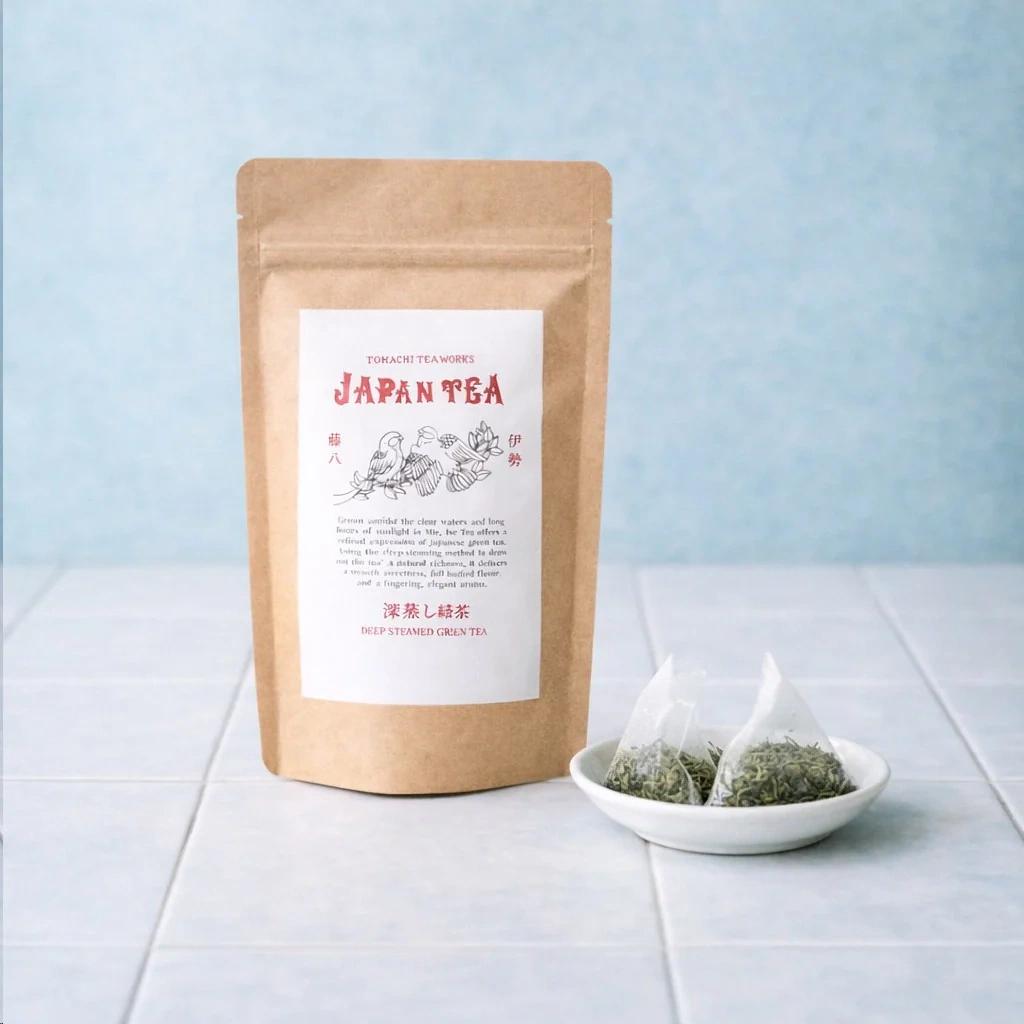
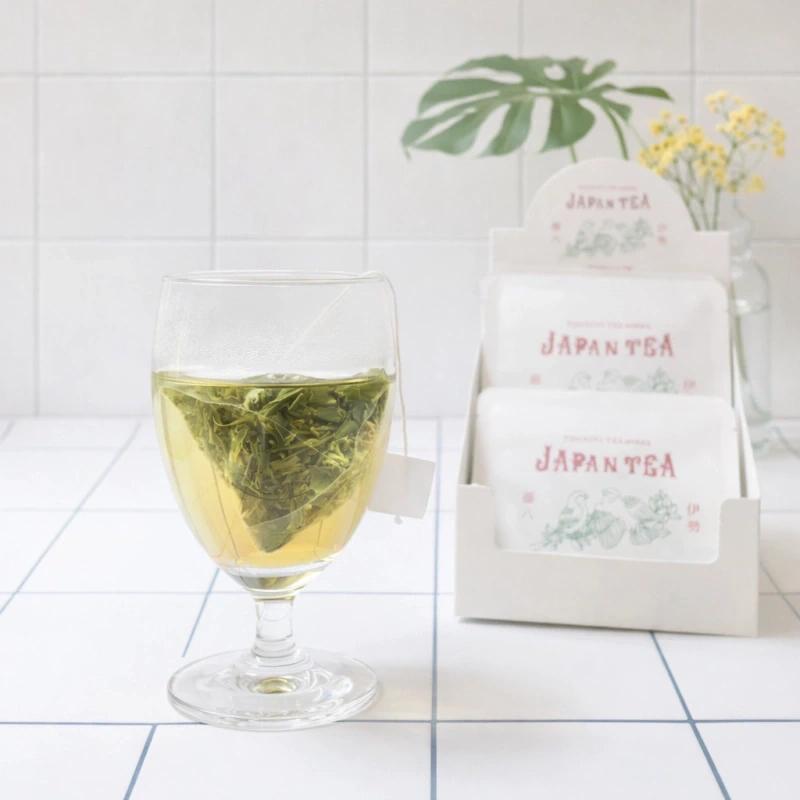
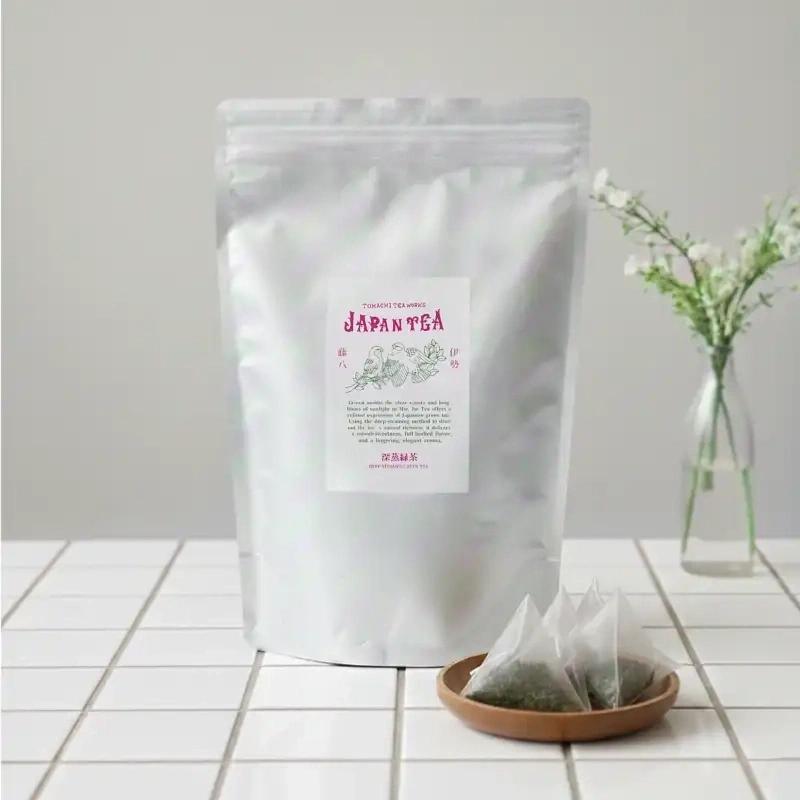
Deep-Steamed Tea Products from Fujihachi Saryo
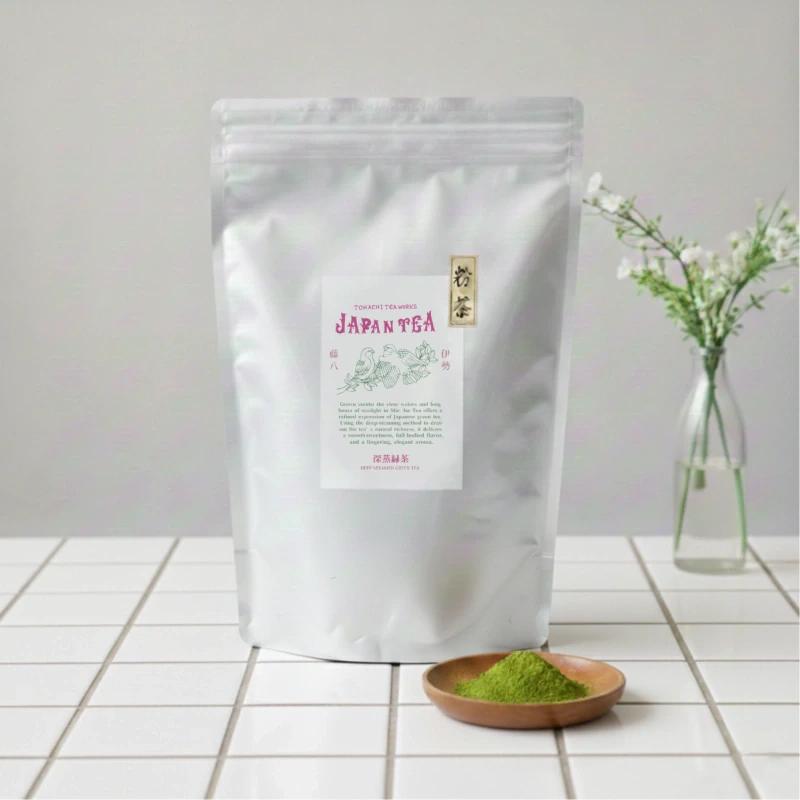
How to Use Deep-Steamed Tea Powder
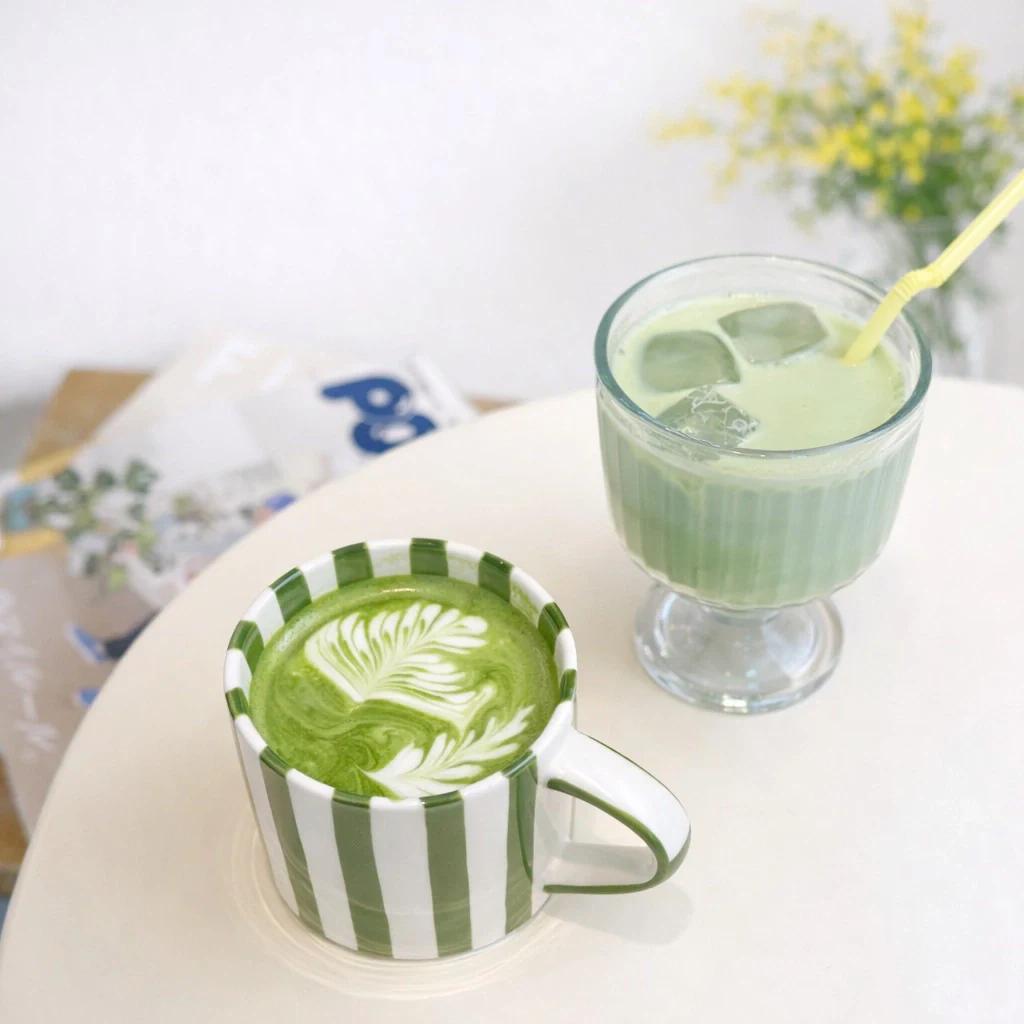
The powder can be used not just as tea, but also in baking and cooking.
- Green tea latte: dissolve the powder in warm milk. Add sugar or honey to taste.
- Baking: when mixing into cookie or cake batter, use 2–3 teaspoons per 100 g of flour as a guide.
- Cooking: use as a substitute for matcha salt alongside tempura or fried foods. The tea's umami brings out the flavour of ingredients.
→ For the difference between matcha and powdered green tea, see our Maccha page
How to Brew Fukamushi Sencha
Hot
- Water temperature: around 70°C (lower temperature brings out more sweetness)
- Amount: 1 teabag, or 2–3 g of loose leaf
- Steeping time: 30–60 seconds
- Tip: pour boiling water into a cup first, then transfer to the teapot — this naturally lowers the temperature to around 70°C
Cold brew
- Add 1–2 teabags to 500 ml of cold water and refrigerate for 30 minutes to 1 hour
- The natural sweetness is more pronounced — great for hot weather or for children
- Remove the teabags after brewing before storing
Frequently Asked Questions
- Q.What is the difference between fukamushi sencha and regular sencha?
A.The steaming time is 2–4 times longer than usual (60–180 seconds), which breaks down the tea leaves' cells, resulting in less bitterness and a smoother, mellow flavour. The liquor colour is also a distinctive deep, cloudy green.
- Q.Can I make cold brew tea with it?
A.Yes. Simply place teabags in cold water and refrigerate for 30 minutes to 1 hour to enjoy a sweet, cold-brew fukamushi sencha. Almost no bitterness comes out, making it a great choice even for those who don't usually enjoy green tea.
- Q.Do you use pesticides or additives?
A.We use only tea leaves grown in Mie Prefecture and add no additives whatsoever. The only ingredient is "green tea (Mie Prefecture)".
- Q.What is the shelf life?
A.The shelf life is one year from the date of manufacture. After opening, store away from moisture and consume as soon as possible.
- Q.Which do you recommend — the powdered tea or the teabags?
A.Teabags are ideal if you want a quick, delicious cup. Powder is recommended if you want to use it for baking, matcha lattes, or other recipes. Both use the same tea leaves from Kawamatatani.